
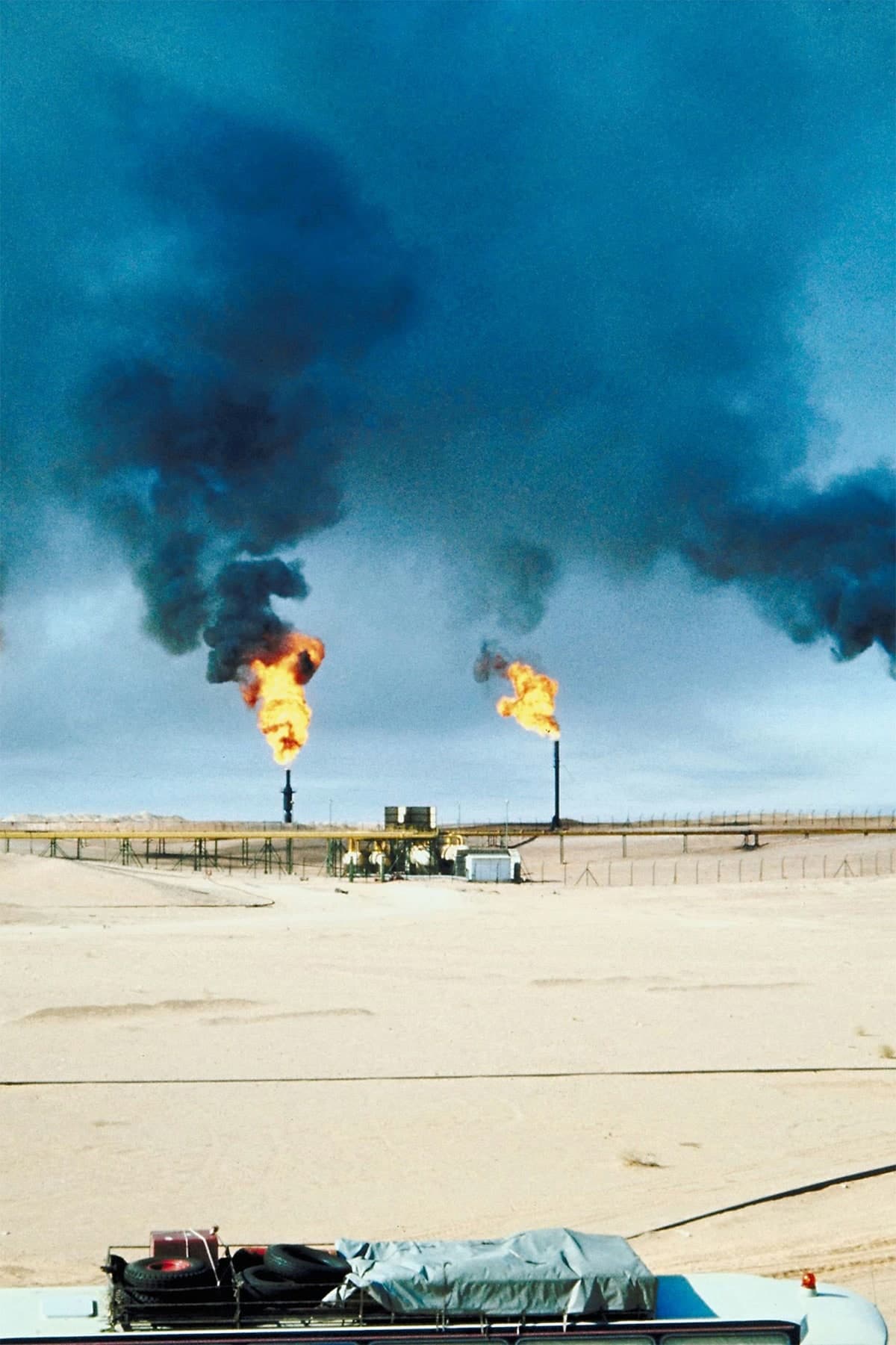
Volatility is the price of admission
It’s been a noisy, chaotic first half to 2025 — wars, tariffs, stimulus packages, volatile oil, and plenty of political drama.

Neil Woodford
W4.0
Volatility is the price of admission
Neil Woodford
W4.0
It’s been a noisy, chaotic first half to 2025 — wars, tariffs, stimulus packages, volatile oil, and plenty of political drama.
"Volatility is the price of admission. The prize inside is superior long-term returns, you have to pay the price to get the returns.”
I can think of no more apt commentary on financial markets in 2025 than this great quote from Morgan Housel, an award-winning US author and columnist.
So far, and we are not yet at the half way stage, investors have had to contend with the election and radical policy stance of Donald Trump, fears of a global trade war, the reality of extreme tariffs on April 2nd, their subsequent amelioration, a radical shift in US defence policy and its implications for Europe, NATO and the war in Ukraine, the outbreak of war between Israel and Iran, direct US involvement in that war and an apparent peace deal between the combatants.
Alongside these critical geo-political events, markets have also had to contend with targeted stimulus in China, aggressive policy easing by the ECB, caution from the FED and something in between from the MPC, and significant $ weakness. Commodity prices have also been highly volatile, best represented by the oil price, which has been as high as $82 a barrel in early January and as low as $60 in May.

Despite all this volatility, and one pretty big global panic in April, financial markets are broadly where I expected them to be at the start of the year. The Hang Seng is leading the way, up just over 20% in local currency terms, reflecting the much better performance of leading Chinese tech firms in particular, the Euro Stoxx 50 is up 8.6%, which has been something of a surprise to me, the FTSE 100 is up 7.6%, and the S&P 500 is up 2.4%.
Government bond yields have also been volatile this year, especially in the UK. In summary, though, since the start of 2025, they are broadly flat in Europe and China, down a bit in the UK and down more in the US, which, given the apparent consensus concerns about growing public debt in the US, might surprise some.
Clearly, less than six months is a very short period over which to judge anything in financial markets, but I think there are some important lessons for investors hidden away amongst the turmoil. Perhaps the most important is once again to stress that markets are noisy, and especially so this year, and so frequently have the capacity to unnerve investors who aren’t anchored to a well-thought-through, long-term focused investment strategy.
Looking forward to the next six months, I really am struggling to believe that we will have to confront the same level of volatility in politics, economics, or financial markets that we have endured recently. In some respects, the more drama markets have had to confront, the more acclimatised they become to these events.
My core expectations also remain in place which are that in global equity markets the UK and China (Hang Seng) will continue to outperform, Europe, which has had a good first half of the year, is in my view unlikely to repeat that feat in the second, and the S&P 500 still looks over valued to me. I expect it to continue to lag as it has in the first half of 2025.
In bond markets, the next six months will see the FED and the Bank of England both cutting rates and probably by the same 50bps in total in two 25bps chunks. This will support their respective government bond markets, where I expect ten-year yields to fall to close to 4% by year-end and possibly below. This move will reflect less concern amongst policymakers about the inflationary consequences of tariffs and lower energy prices in the second half of the year as tension in the Middle East abates and higher OPEC output helps to bring down oil prices.
This is, by its nature, an overview, and so it misses out on the detail on opportunities I see in individual markets like the S&P 500, which I am not keen to own as an index. Of course, these specific situations are represented in the W4.0 strategies. If you haven't already, I'd encourage you to take a look and consider joining before our launch pricing ends on July 7th.
Related reading

How not to run an economy
Why this government's fiscal incontinence has left it unable to fund defence, and what a real growth revolution would look like.
Read more
The demographic landslide: why birth rates are collapsing everywhere
The UN keeps cutting its population forecasts – and the latest fertility data say it still isn't pessimistic enough. Neil Woodford on the collapse almost no one is pricing in, and the device that may be driving it.
Read more
A dose of reality
As policymakers warn of doom, the data tells a different story. Neil takes apart the MPC, the IMF and the Chancellor in light of an April inflation print that undercuts the consensus case for caution.
Read moreStart investing with transparency
Access our full research, strategy insights, and real-time portfolio visibility.