
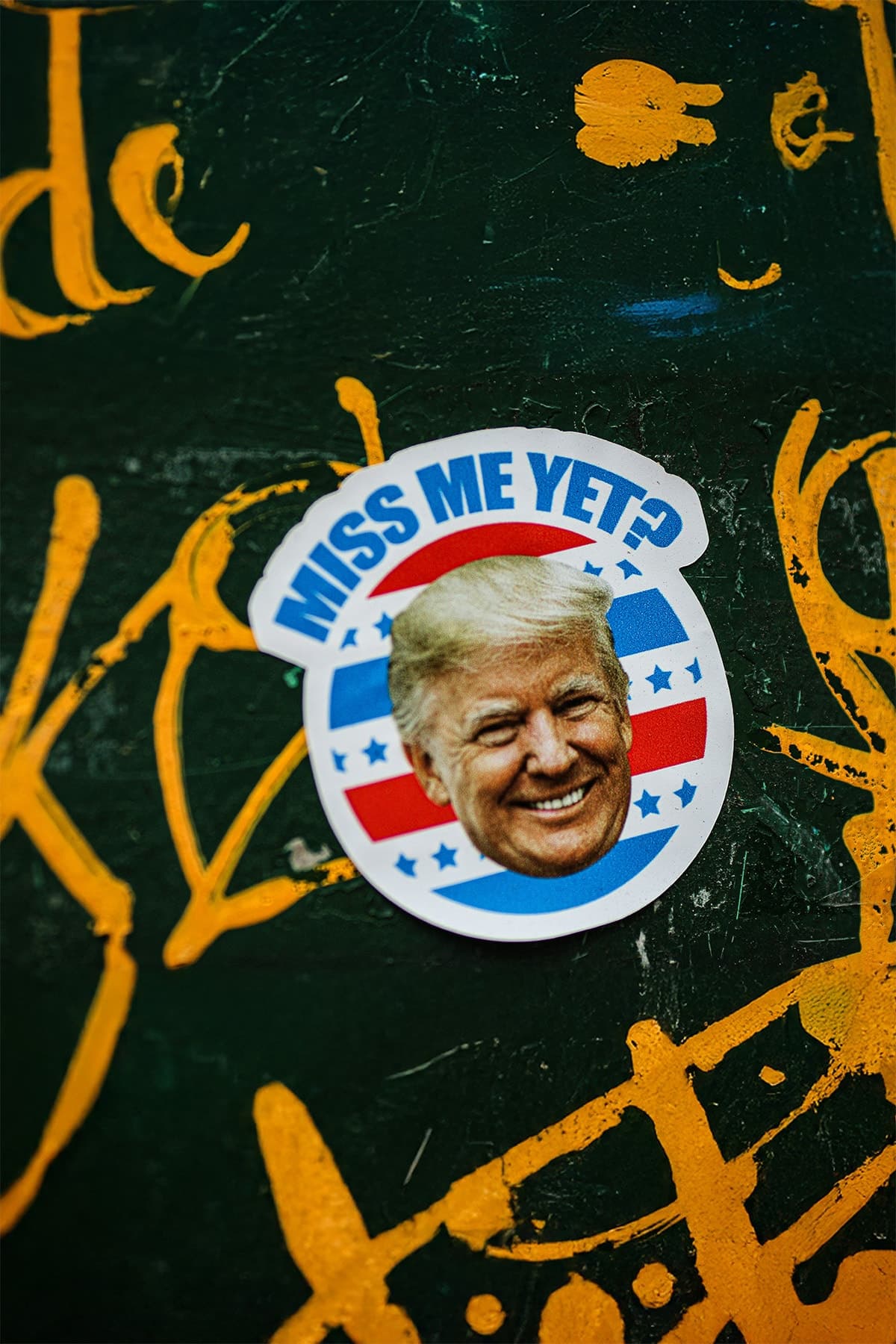
Trump Wins: Markets React, China Braces
The US election results are in. With Trump’s victory and a Republican-led Senate, what will this new political landscape mean for global growth, inflation, and upcoming central bank decisions?

Neil Woodford
W4.0
Trump Wins: Markets React, China Braces
Neil Woodford
W4.0
The US election results are in. With Trump’s victory and a Republican-led Senate, what will this new political landscape mean for global growth, inflation, and upcoming central bank decisions?
This week was always going to be very important for financial markets, and unsurprisingly, the US elections are dominating today. In some ways, because the polls were so close ahead of election day, the clarity of the results has come as something of a surprise. My fear ahead of the election was that uncertainty about its outcome would unsettle markets as it did back in 2000 when it took until December 13th before Al Gore conceded.
As it is, albeit the outcome of the House of Representatives elections is not yet clear, the Republican party has won the Senate and Donald Trump the presidency. Perhaps unsurprisingly, the result lifted European equity markets, strengthened the dollar, and caused the Treasury market to fall. S&P futures are also up significantly (over 2%), and Bitcoin is at an all-time high. However, equity markets in China have fallen in response to fears that Trump’s pre-election tariff warnings will become a reality and further undermine the export-led growth story that has been a concern for a while.
Donald Trump will be the next president of America. Wisconsin’s ten electoral-college votes put him on 277, passing the threshold of 270 needed to win the race https://t.co/s5Lpn6E9Iq pic.twitter.com/gZahJ8cTfc
— The Economist (@TheEconomist) November 6, 2024
Although the clarity of the result is a surprise, the financial market responses broadly match what would have been predicted. Ultimately, Trump’s economic agenda is seen as positive for US growth and corporate profits but also potentially inflationary and will inevitably lead to larger deficits, at least in the short term. For me, the most interesting thing about the next four years will be to see what this experiment in smaller government, a more protectionist trade policy and lower taxes delivers in terms of US economic performance, but also how other major global economies respond to this agenda. Perhaps the first opportunity for a reaction will be the Chinese government’s fiscal policy announcement on Friday. My guess is that the outcome of the US election will make it more likely that the scale of the package will not disappoint, given that China’s future economic performance will now rely even more on domestically generated growth. It’s also important to remember that the leadership’s credibility is invested not just in what is announced but also in how China’s equity investors respond to the measures.
Having said this, though, I also believe there is a decent chance that the expected intensified trade war between China and the US will not pan out as the consensus currently expects. Donald Trump has in the past been unpredictable, not least for example, in international relations with countries traditionally seen as adversaries of the US. Also, his predisposition to do deals may lead to some form of negotiated trade agreement with President Xi. It may, at the moment, seem highly unlikely, but I wouldn’t rule it out completely.
The other key events this week for financial markets are the FED and Bank of England interest rate decisions, which will be announced today and tomorrow, respectively. In both cases, I expect a 25bps cut in official rates. If this is what we get, I would expect both the treasury and gilt markets to respond positively.
Over the weeks ahead, I expect to write more in-depth pieces about the industry and sector implications of this week’s events. Of particular importance are the impacts on the automotive and technology sectors, both of which are economically and politically very sensitive.
Related reading

How not to run an economy
Why this government's fiscal incontinence has left it unable to fund defence, and what a real growth revolution would look like.
Read more
The demographic landslide: why birth rates are collapsing everywhere
The UN keeps cutting its population forecasts – and the latest fertility data say it still isn't pessimistic enough. Neil Woodford on the collapse almost no one is pricing in, and the device that may be driving it.
Read more
A dose of reality
As policymakers warn of doom, the data tells a different story. Neil takes apart the MPC, the IMF and the Chancellor in light of an April inflation print that undercuts the consensus case for caution.
Read moreStart investing with transparency
Access our full research, strategy insights, and real-time portfolio visibility.